
What Ontario County Property Tax Records Show
An Ontario County roll is dense. Owner, situs and mailing addresses, SBL, property class, acreage, land and total assessment, exemptions, deed reference, and a computed full-market value all appear. Taxable values sit there too, sorted by jurisdiction. The bill then adds rates and collection rules. Because county, city or town, and school exemptions differ, one taxable figure never answers for every levy.
| Field | What It Shows | Where |
|---|---|---|
| Assessed value | Roll value before exemptions | Municipal assessor |
| Full-market value | Assessment adjusted by stated level | Final roll |
| Exemptions | Reductions by eligible program | Assessor and roll |
| Tax bill and status | Levy, due periods, payment stage | Collector or Treasurer |
| Taxing districts | County, municipal, and school columns | Roll and bill |
Read every amount with its jurisdiction and year attached. One Ontario County parcel can carry several taxable values at once, and each figure means something different.
Looking Up a Ontario County Tax Bill
Find the parcel in OnCor first. Confirm its SWIS and SBL. Then open the county's Tax Bills and Payments route. County and town bills begin with local collection and may later pass to the County Treasurer for enforcement. Canandaigua and Geneva collect city taxes through their own channels, and the collector should answer any unclear certificate warning or payment status.
- Search OnCor by address or parcel and confirm municipality.
- Open the correct final assessment roll.
- Follow the county or city tax-bill route for that levy.
- Contact the collector responsible for the displayed payment stage.
- Assessed value
- The roll value assigned for tax administration.
- Levy
- The tax charge produced under the applicable rates and taxable base.
- STAR and other exemptions
- Programs that reduce qualifying taxable value under their own rules.
- Tax lien
- A statutory claim associated with unpaid property tax enforcement.
Appealing a Ontario County Assessment
Assessment review follows the New York roll calendar. It is not a tax-payment dispute. Verify the valuation date and taxable-status date first. Review the tentative roll, talk with the municipal assessor during the review period, and file the prescribed grievance with the Board of Assessment Review by the locally published deadline. A recent arm's-length sale, comparable properties, an appraisal, photographs, and corrected parcel facts can all support the claim.
Appeal window. Ontario County municipalities publish their own grievance dates within the annual tentative-to-final roll cycle. Confirm the current calendar with the municipal assessor and Board of Assessment Review.
Read an Ontario County Tax Record
A tax record holds several values because each does a different job. Assessment is the assessor's own figure. Full-market value is a roll estimate, derived through the municipal level of assessment. Exemptions cut taxable value for one or more jurisdictions. The bill then applies levy rates and collection rules to the taxable base.
| Record | What It Shows | Custodian |
|---|---|---|
| Final assessment roll | Owner, parcel, assessment, exemptions, taxable values | Municipal assessor |
| OnCor parcel report | Mapped parcel, roll attributes, deed reference, tax links | Ontario County GIS/RPTS |
| Tax bill | Levy, due periods, interest, and payment status | Local collector or Treasurer |
| Recorded deed | Conveyance and grantee confirmation | Ontario County Clerk |
Ontario County's Assessment Calendar
County data notes put the parcel-boundary freeze near March 1. Tentative data and rolls arrive around May 1. Final rolls follow near July 1. Canandaigua also publishes its own assessment calendar and transfer information. A property sold after taxable status can still sit under the former owner on that roll, even with the new deed recorded. So compare source dates before assuming an error. The county assessment and tax resource page gathers roll, rate, grievance, and municipal links.
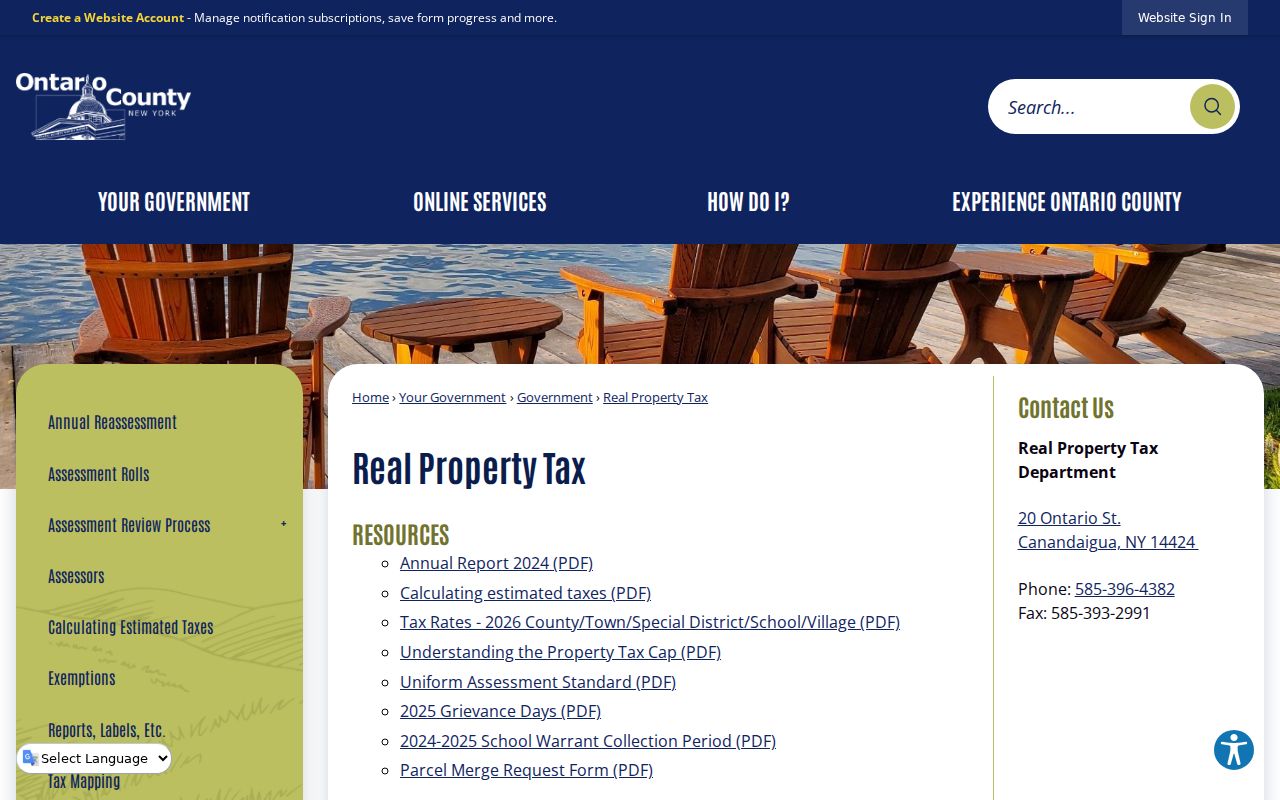
The page is the county's handoff to assessor and annual review resources. Local assessors keep the official assessment.
Canandaigua and Geneva Roll Differences
Canandaigua's 2025 final roll lists a 100.00 percent uniform percentage. Geneva's 2025 final roll lists 92.00 percent. That difference changes how an assessed amount relates to the roll's full-market estimate. Neither figure predicts an arm's-length sale price. New York ORPTS explains the relationship through level of assessment and equalization data. Geneva shows why exemptions need reading by jurisdiction. One parcel can carry different county, city, and school taxable values, including a lower school figure where STAR applies. Report the specific column and roll year.
Find an Ontario County Tax Bill
Use exact parcel and owner details from OnCor. The official tax bills and payments page links the public Total Collection Solution route. Skip any unofficial site. Never enter credentials past an unexpected certificate warning either. County and town bills carry installment and interest rules, and unpaid amounts move from local collectors to the Treasurer on the published schedule.
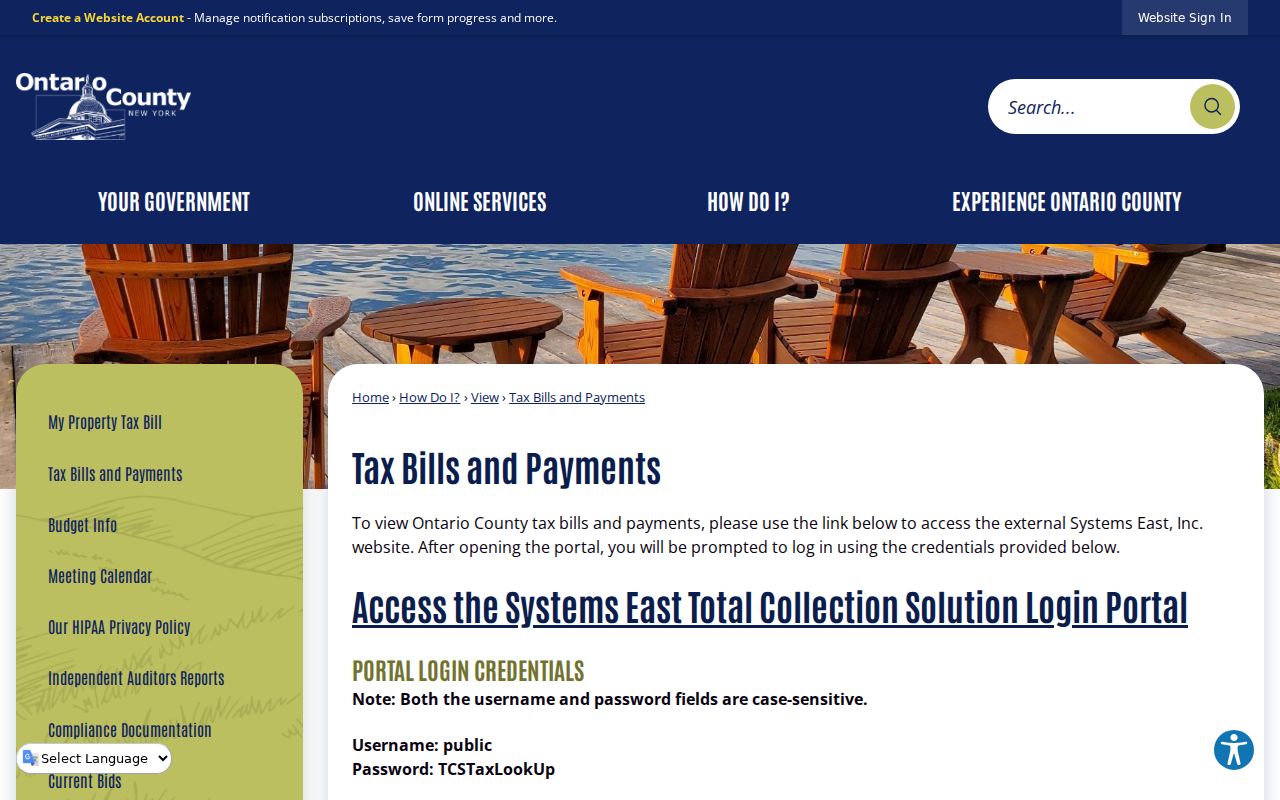
Confirm payment or enforcement questions with the named collector.
Assessment Grievance Is Not an Ontario County FOIL Request
A grievance challenges a value. It follows the assessor and Board of Assessment Review calendar. FOIL is different. It opens access to existing agency records under Public Officers Law article 6. FOIL cannot extend a grievance deadline. Nor can it compel a new valuation analysis. Ask the assessor which correction applies for wrong acreage, classification, improvement, or address, and keep a dated packet with the parcel report, tentative roll entry, photos, deed or survey, comparable sales, and assessor correspondence. For the bill, route payment-posting or exemption problems to the office responsible for that field.
Ontario County Collection Handoffs
County and town bills begin in the local collection period. Installment and interest rules apply along the way. After the collector cutoff, unpaid amounts pass to the County Treasurer. City bills follow city routes instead. Read a portal result with its levy year and collection stage. Never treat it as a timeless balance.
A missing payment belongs with the office that handled that stage. Value and exemption disputes belong with the assessor. Recorded ownership belongs with the Clerk.
Ontario County Exemption Columns
Exemptions in Ontario County rarely cut every tax bill the same way. STAR, veteran, and aged exemptions apply differently to county, municipal, and school taxable values. Match each code to the right column. Match each dollar amount the same way. A school value may drop. The county figure can stay flat. Check the final roll to see what was actually applied. Questions about eligibility go to the municipal assessor under current program rules. File personal supporting documents through the assessor's designated channel rather than informal notes.
Ontario County Tax Record Date Checklist
Dates explain most mismatched Ontario County tax numbers. Check the valuation date, taxable-status date, and whether the roll is tentative or final. Note the levy year, bill issue date, and payment-posting date too. Any deed recording date matters as well. A sale after taxable status leaves the prior owner of record on the roll. An exemption may not carry into another year or into every jurisdiction the same way.
Keep SWIS and SBL handy. The comparison then stays on one parcel after any split or merge. Turn to the assessment roll for value and exemptions. Use the bill portal for charges and payments, and the Clerk for conveyances. The assessor handles corrections and grievances. Each office can fix only its own part of the property record.
Note: Use the final roll for the official annual assessment snapshot and the collector's system for the bill's current payment stage.
Before requesting any correction, compare the effective dates and jurisdictions behind the differing figures. Keep the parcel number attached to that request.